If you’re the parent of a child with autism, you’ve probably experienced it.
You’re at the playground, at a birthday party, or at school, watching other children naturally make friends and join games. Your child wants to be part of what’s happening—but isn’t quite sure how to join in, keep a conversation going, or navigate the social interactions that come so naturally to many other children.
It can be heartbreaking to watch. It can also leave parents wondering, “How do I help my child build these skills?”
Long before children can explain social rules, they’re learning them naturally. They learn how to start conversations, take turns, solve disagreements, recognize emotions, work together, cope with losing a game, and build friendships—all through play.
For many children with autism, these learning opportunities are much harder to access.
In fact, many children with autism deeply desire friendships and social connection. Yet because social situations can be much harder to understand and navigate, they often miss many of the learning opportunities that other children experience naturally.
At Cully, we believe that social skills are often the key that unlocks so many other areas of a child’s development. As children become more confident interacting with others, they’re often better able to participate in school, regulate their emotions, advocate for themselves, develop independence, and build meaningful relationships.
That’s why we developed Cully Social Play Coaching —a program built around individualized coaching, purposeful play, and meaningful interactions with peers.
It All Starts with Understanding Your Child
No two children are alike, and we don’t believe every child should receive exactly the same coaching.
Before your child ever joins one of our Social Play Coaching groups, we spend time listening to you.
We want to understand far more than the challenges your child faces. We learn about your child’s strengths, interests, communication style, sensory preferences, motivators, triggers, and the strategies that work best for them. Just as importantly, we want to understand what success would look like for your child. What skills would make the biggest difference in your family’s everyday life?
That conversation becomes the foundation for an individualized plan focused on the skills that will have the greatest impact on your child’s everyday life. As your child grows, those goals continue to evolve.
Creating a Desire to Interact
One of the biggest differences in our approach is that we don’t try to manufacture social interaction—we create an environment where children genuinely want** to interact with one another.**
Children learn best when they’re engaged, having fun, and excited to participate.
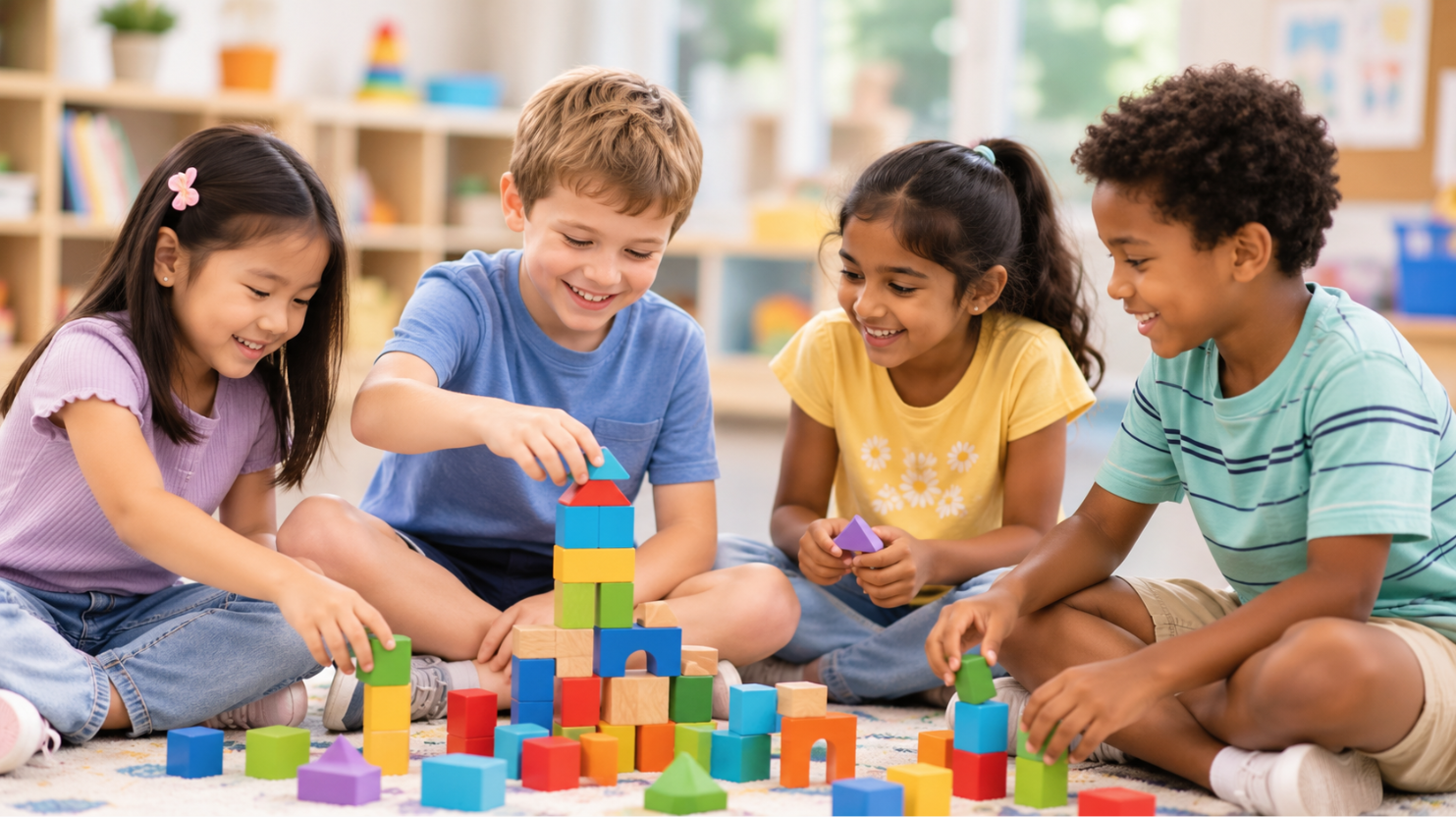
That’s why our sessions are held in fun environments like indoor playgrounds that children are eager to visit. Games, toys, movement activities, and cooperative challenges naturally encourage children to communicate, solve problems together, and enjoy one another’s company.
Every activity has a purpose.
We don’t choose games simply because they’re enjoyable—we choose them because they naturally create opportunities for children to practice the exact skills they’re working to develop. One activity may encourage conversation and turn-taking. Another may strengthen emotional regulation, flexible thinking, or cooperative problem-solving. Every game has a purpose.
We also intentionally pair children based on their individual goals. Sometimes one child is learning to initiate conversations while another is practicing responding. Other pairings are designed to build flexibility, emotional regulation, or cooperative play. Every interaction is intentionally coached—not simply supervised.
Children are encouraged and celebrated throughout each session, earning points that lead to playground time afterward, creating a positive environment where learning and fun go hand in hand.
When children are excited about the activity, their communication becomes more natural, their interactions become more meaningful, and the learning becomes far more likely to last.
Coaching in the Moment
Social skills aren’t learned by listening to a lecture.
Children learn through experience.
During each session, we explicitly teach important social skills by explaining, modeling, practicing, and then encouraging children to use those skills naturally with their peers.
Our coaches recognize teachable moments as they happen, providing gentle guidance and immediate feedback while children are actively interacting with one another. Those authentic moments are where some of the greatest learning happens.
Our Goal Is Generalization
One of the biggest challenges in teaching social skills is helping children use them outside the teaching environment.
It’s wonderful when a child demonstrates a new skill during a session. What’s even more important is seeing that same skill appear at school, at home, on the playground, during birthday parties, or while interacting with siblings.
That is our goal.
Success isn’t measured by what happens during one hour each week; it’s measured by what children begin doing everywhere else.
We want children to build skills that become a natural part of how they communicate and interact—not skills that only appear during structured teaching.
You’re Part of the Team
Meaningful progress happens fastest when everyone works together.
We know that no one understands your child better than you do.
After every session, we share immediate feedback about how your child participated, what successes we observed, and where they may need additional support.
Each week, you also receive a summary of your child’s progress, along with practical ideas you can use at home to reinforce the same skills. Social development doesn’t happen in isolation—it grows through repeated experiences across home, school, and the community.
We believe you shouldn’t simply receive updates. You should feel informed, supported, and confident about how you can help your child continue growing.
Building Confidence, One Interaction at a Time
One of the comments we hear most often from parents is, “My child keeps asking when the next session is.”
They have fun.
They laugh.
They build confidence.
They celebrate their successes.
Most importantly, they begin discovering that interacting with other children can be enjoyable, rewarding, and successful.
You’re Not Doing This Alone
We know choosing the right support for your child can feel overwhelming.
Our goal isn’t simply to coach your child. It’s to become part of your team—to understand your child’s unique strengths, celebrate every success, and help your child develop the confidence, communication, and social understanding they’ll carry into school, friendships, family life, and beyond.
At Cully, we believe every child deserves the opportunity to experience the joy of connecting with others. We’re honored to be part of that journey.
Interested in Social Play Coaching? Register today, and we’ll contact you to discuss your child’s unique needs and help you determine whether our Fall program is the right fit. Completing the registration form is completely obligation-free.
Cully Social Play Coaching is now accepting registrations for our Fall 2026 program at Cheeky Monkeys, Sugar Land. Spaces are limited to 8 children per group, so we encourage early registration.
 August 17 – November 18
 Small Groups (Maximum 8 Children)